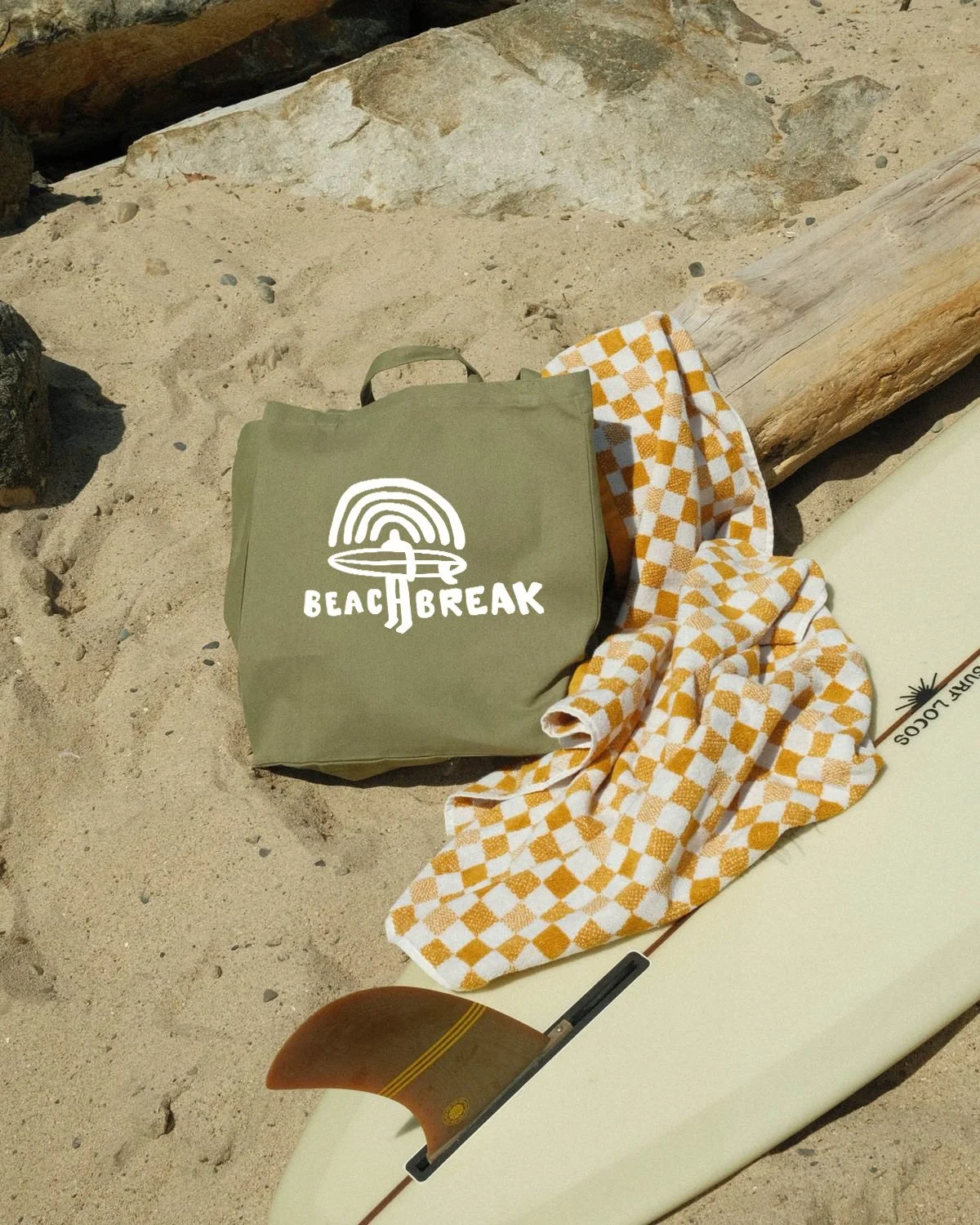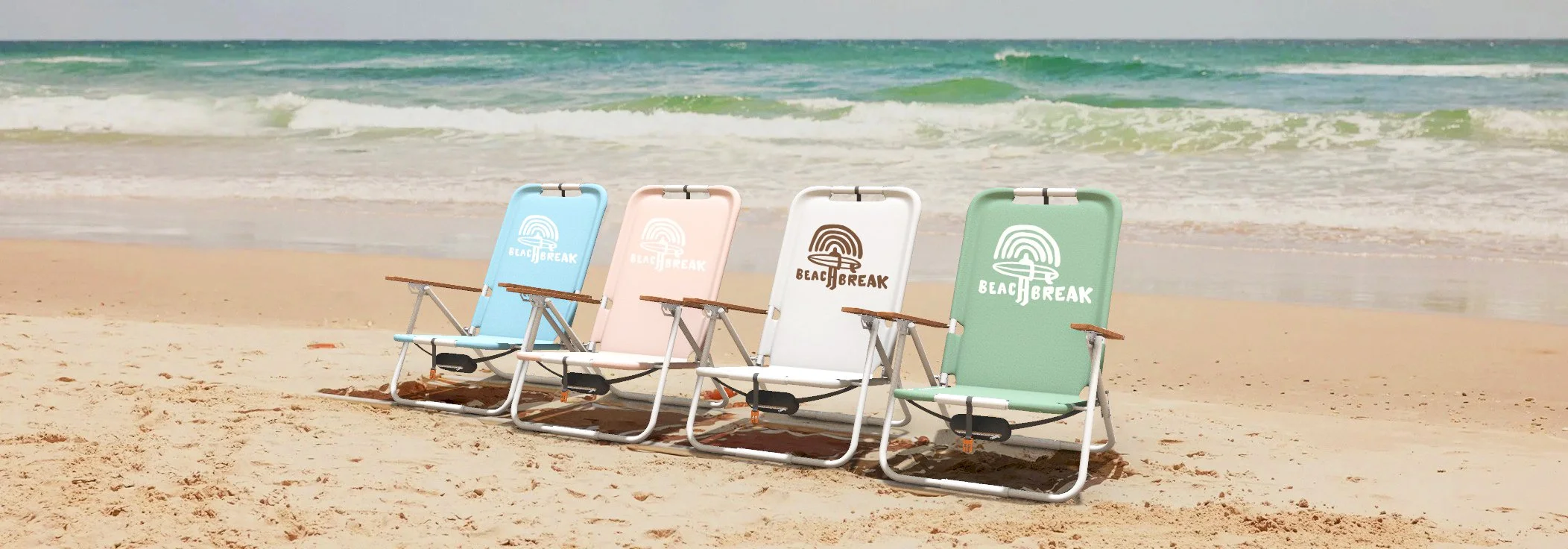
Beach Break is an innovative response to one of the most overlooked challenges in surfing culture: the awkward, uncomfortable task of carrying both a surfboard and a beach chair across long stretches of sand.
The product was developed with strict attention to Design for Manufacturing principles, ensuring that every component can be produced efficiently and at scale.
Software: Rhino, Adobe Suite
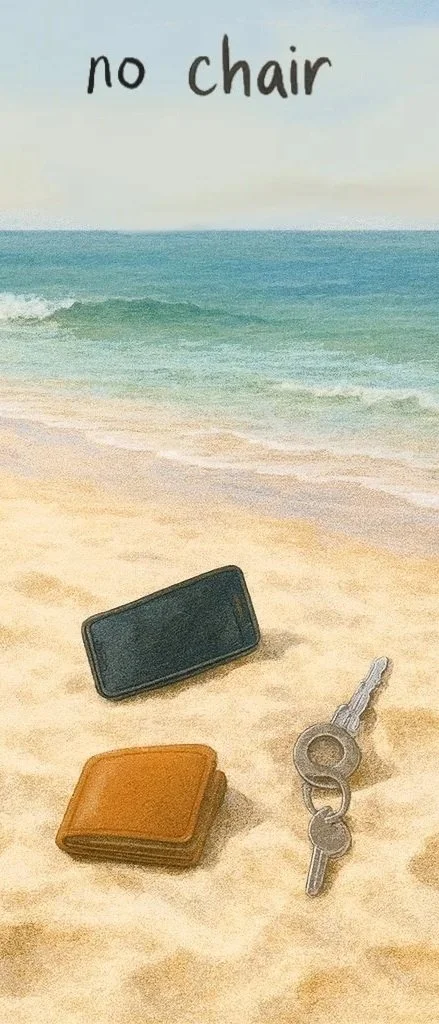
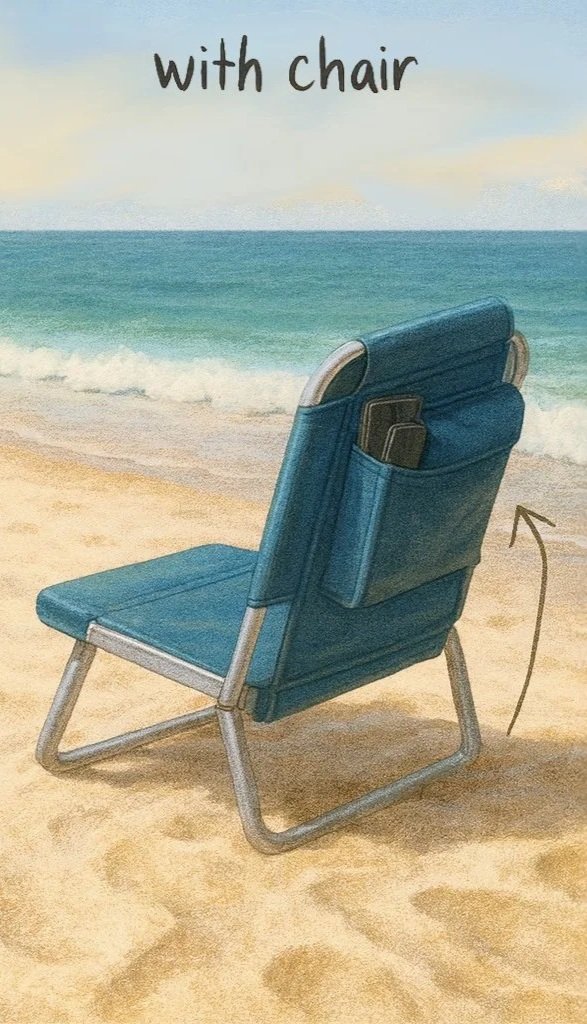
Carrying a surfboard and a beach chair at the same time is awkward and unbalanced, yet without a chair, your phone, wallet, and keys end up buried in the sand or hidden somewhere unreliable.
The items were never designed to be transported together, turning a simple walk into a juggling act.
This project aims to find a way to solve this problem while keeping both items usable.
The Surf/chair dilemma
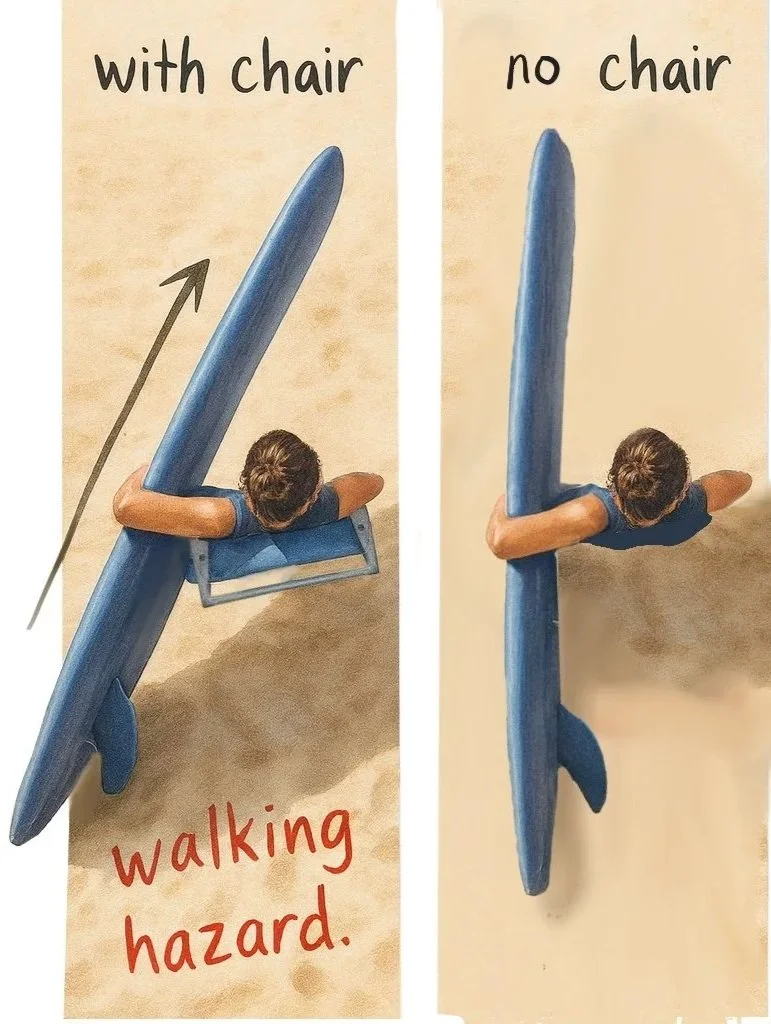
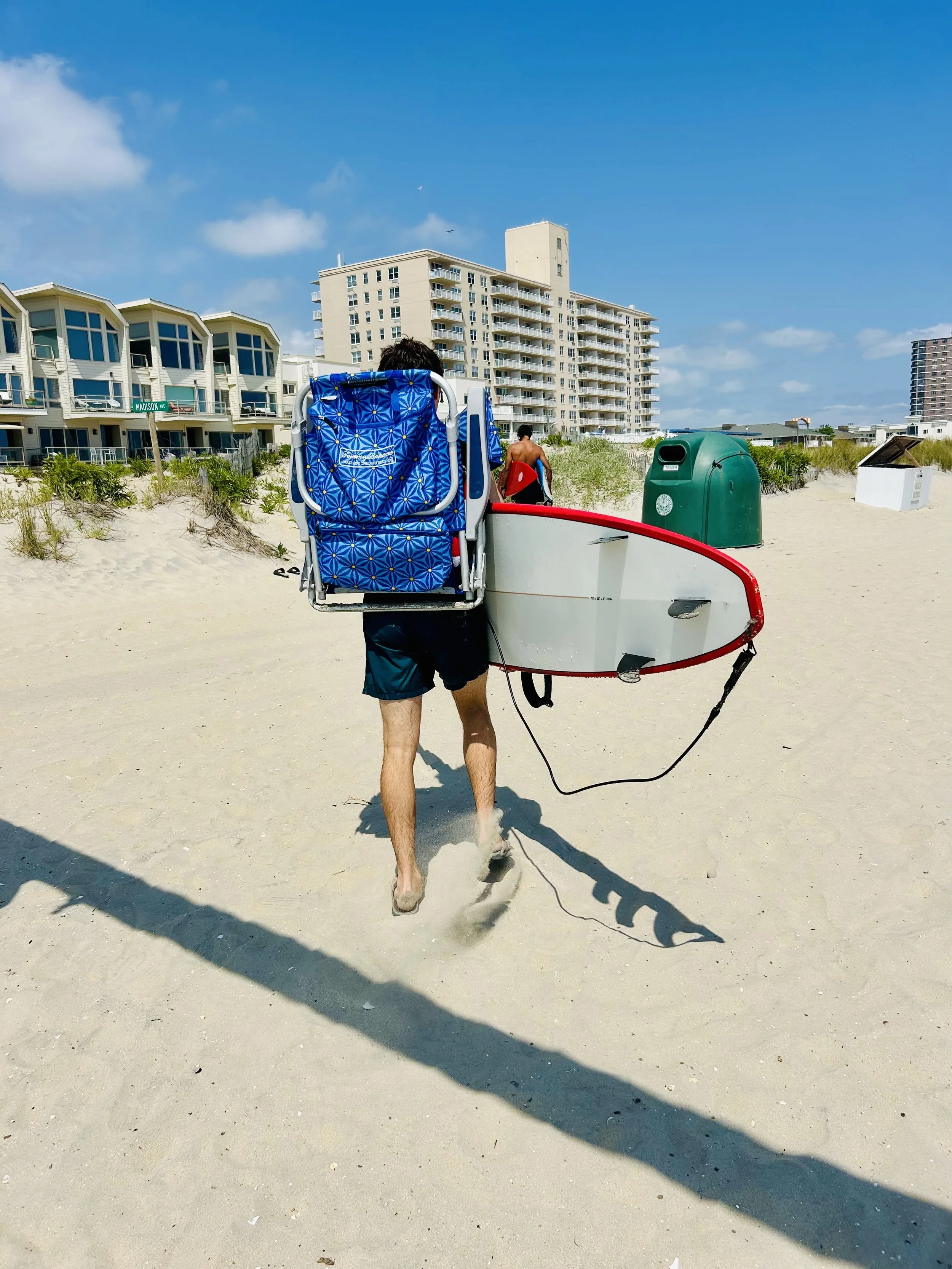
To fully understand the problem, I became the user—I carried a surfboard and a standard beach chair while documenting moments of discomfort.
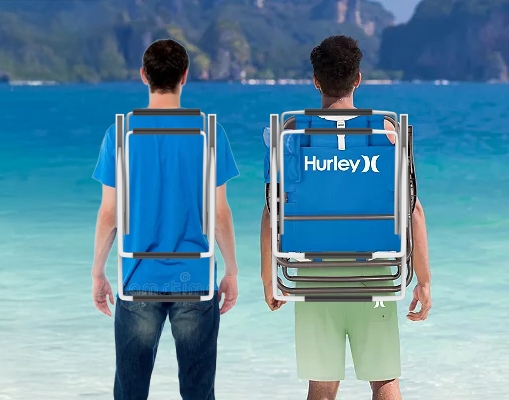
The core issue stems from the chair’s profile. Its width extends far beyond the average person’s shoulders, preventing the surfboard from being held comfortably at one side. Instead, the board is forced into a diagonal position, creating an awkward gait and a safety hazard as it protrudes outward on both sides.
Addressing this challenge begins with rethinking how the chair aligns with the user’s body profile, ensuring it can be carried naturally alongside a surfboard.
User Research
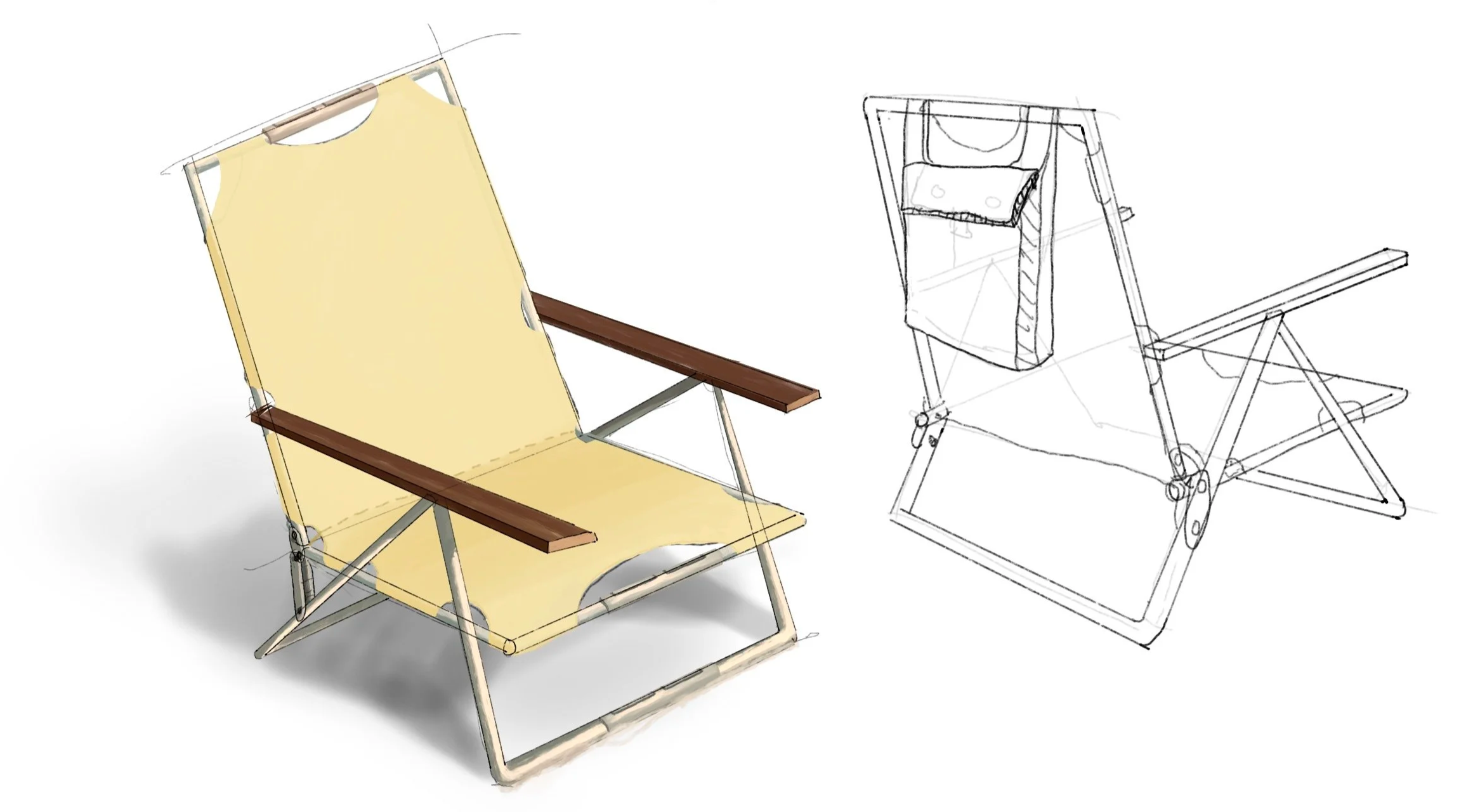
Prioritized researching ways to collapse the chairs profile while keeping the simple folding mechanism.
Ideation/concept
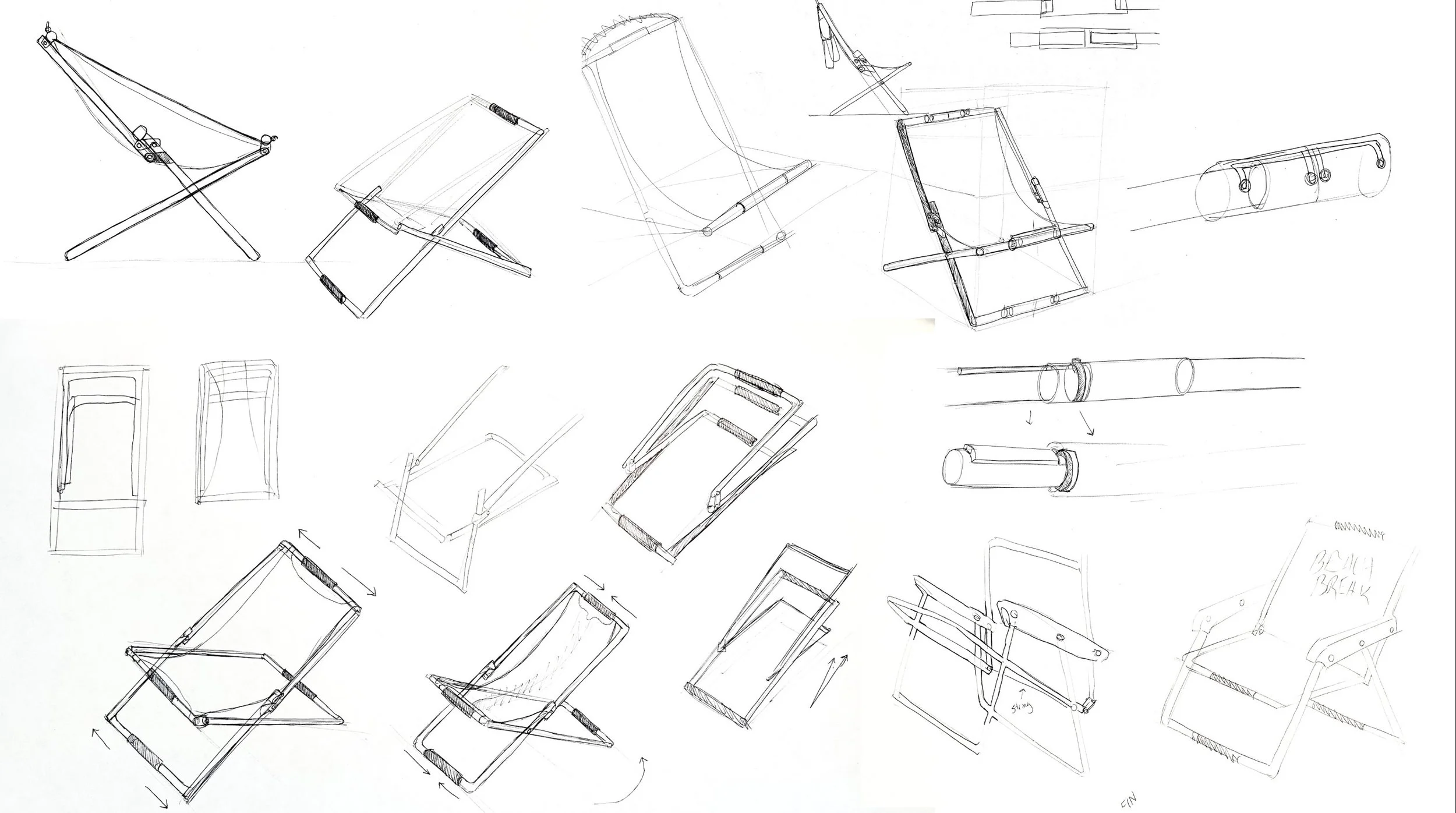
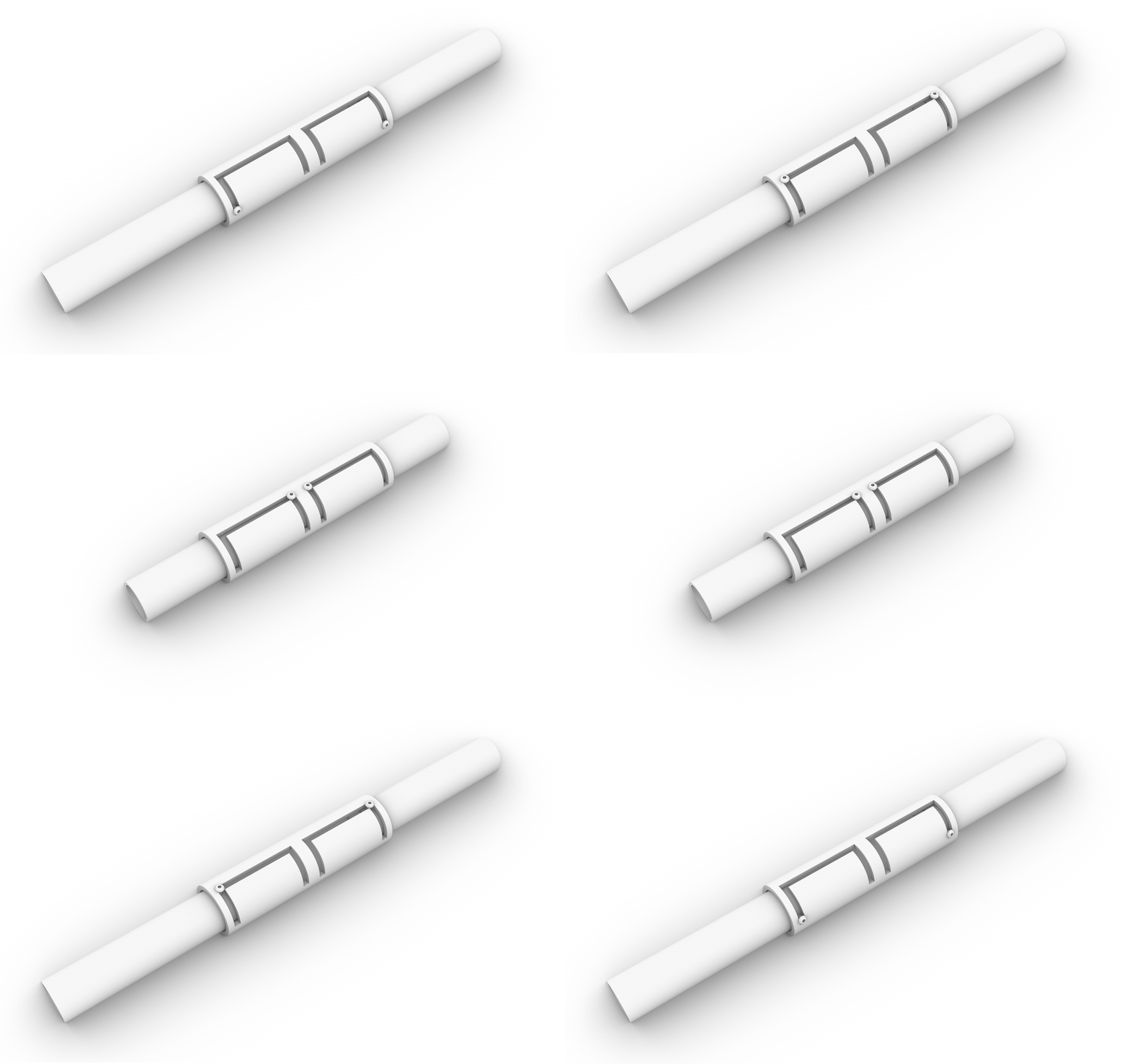
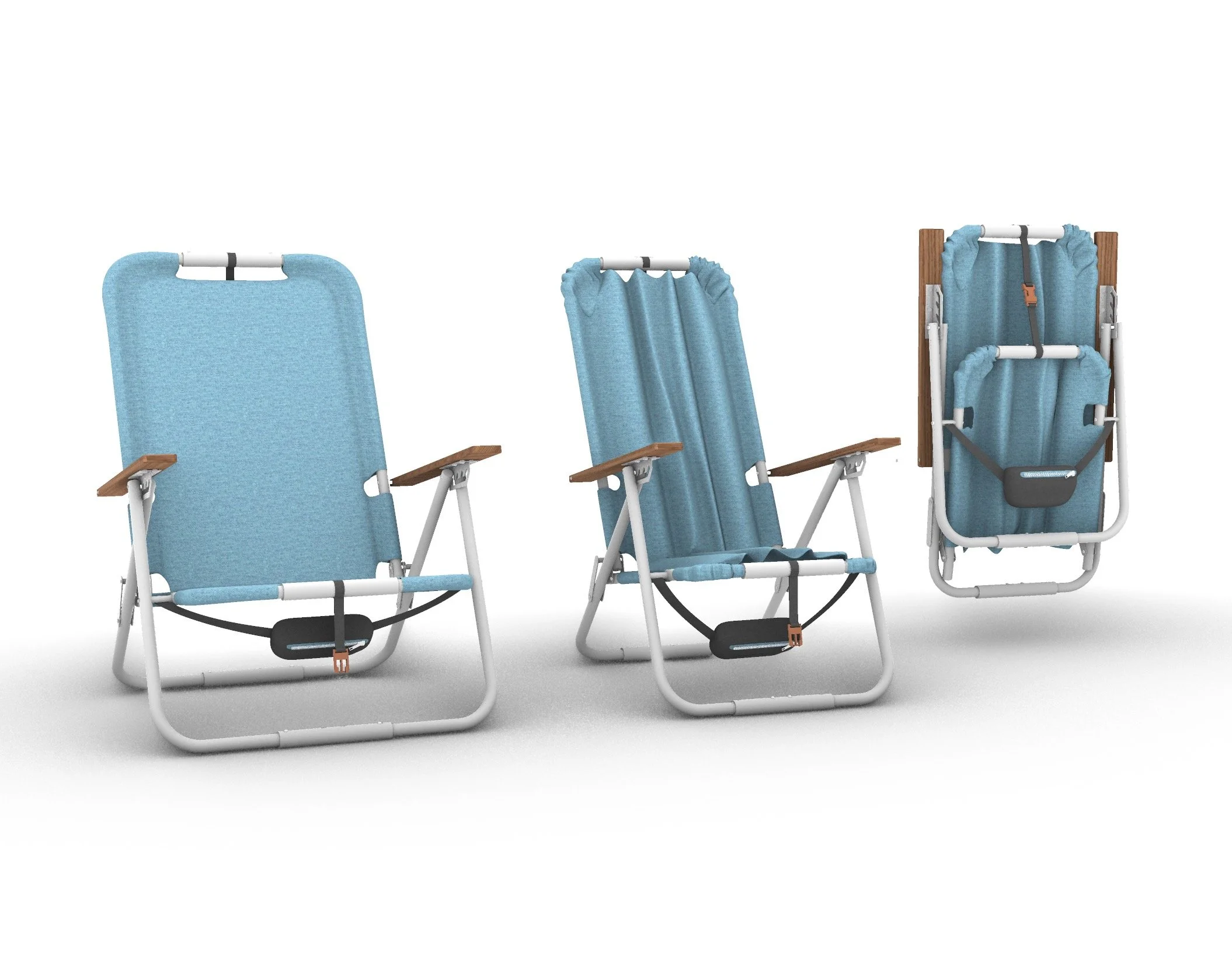
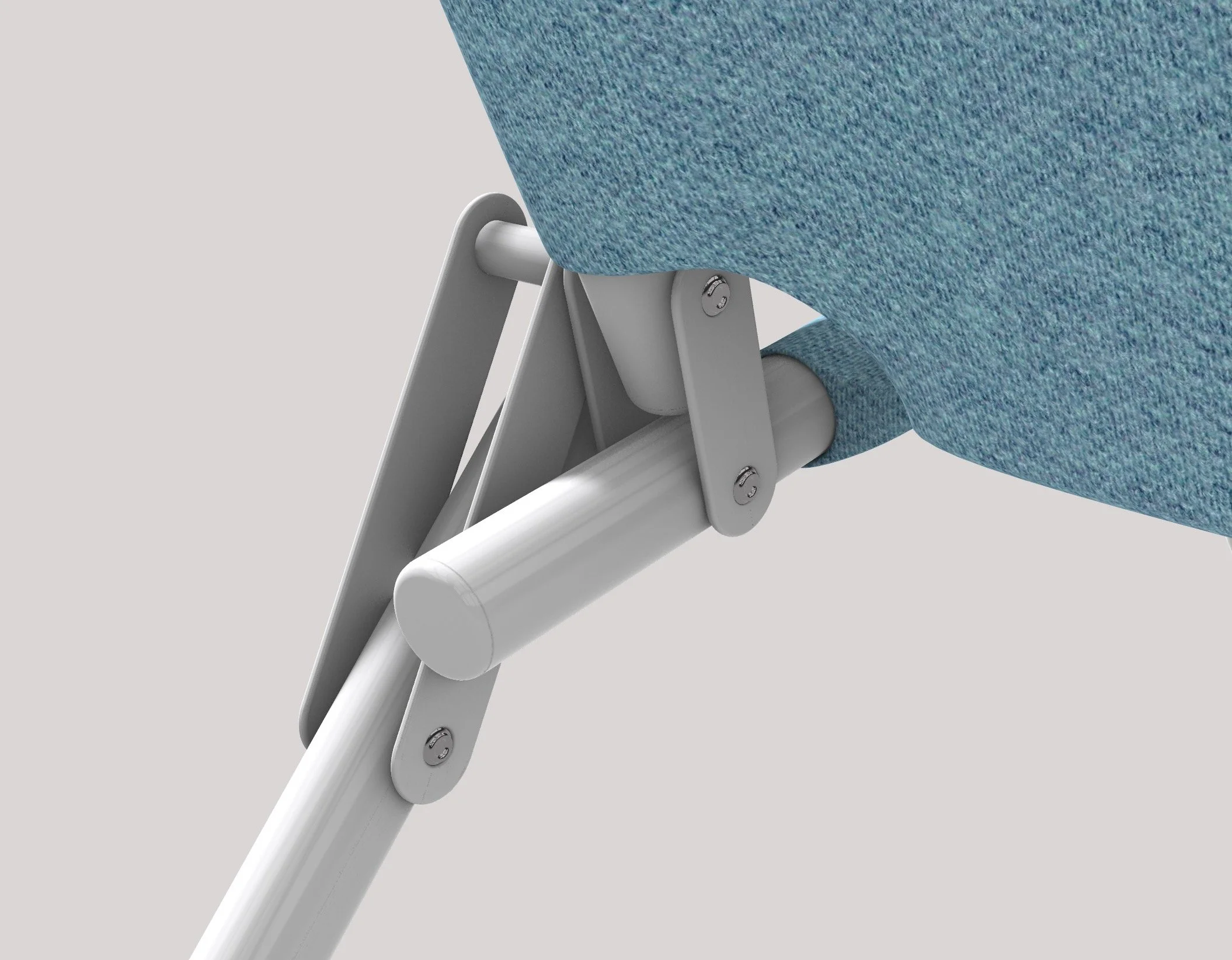
I developed a simple mechanism that allows the chair’s profile to expand and contract so it fits comfortably within the width of a user’s shoulders.
The system relies on the same manufacturing components found in a standard folding chair and introduces no additional material, ensuring the overall production cost remains comparable.
A 1/3 ratio was used to achieve the optimal range of extension and contraction.
I then produced a physical prototype to validate the mechanism’s functionality before refining the form, tolerances, and overall design.
Mechanism & Production
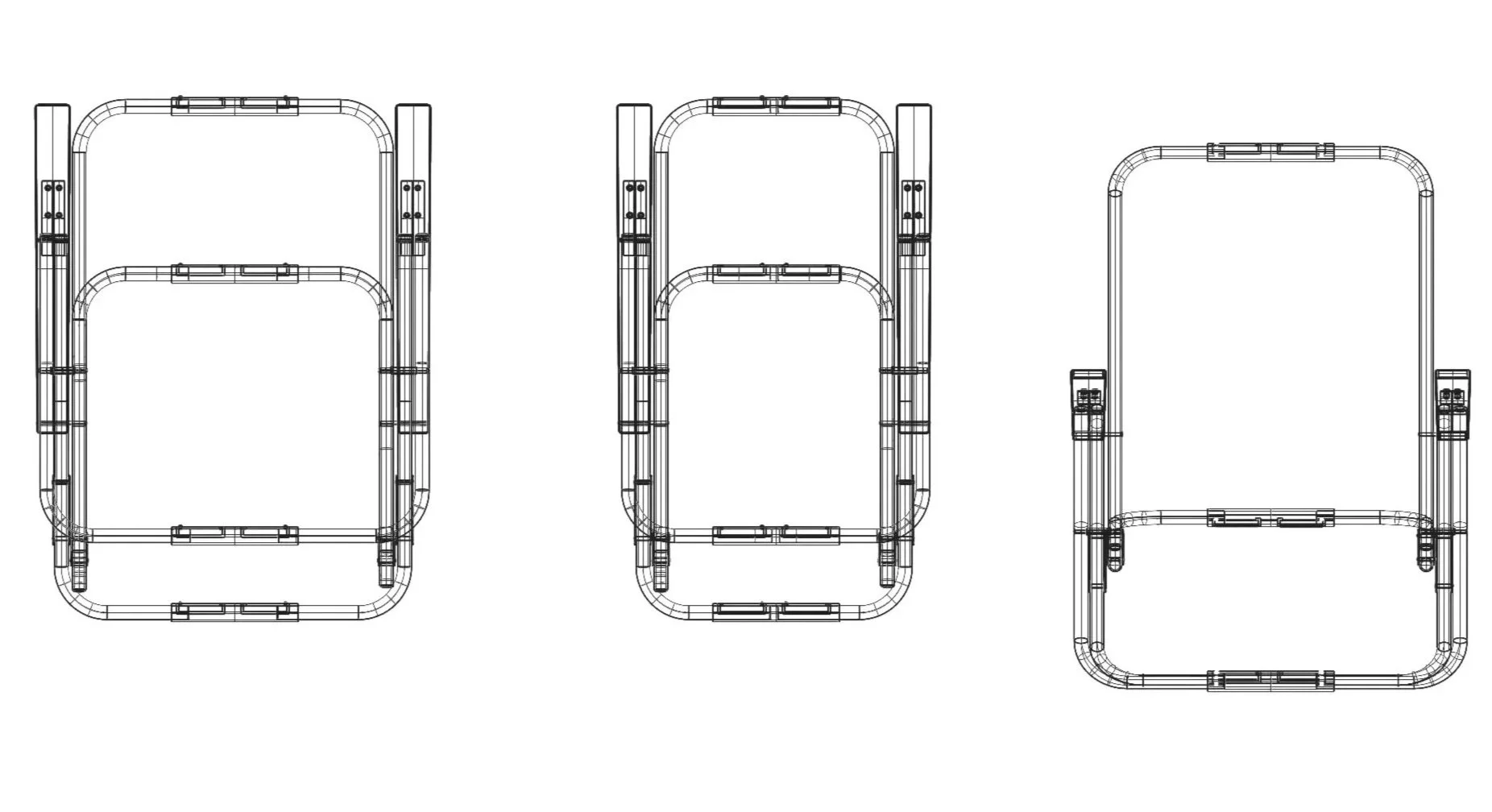
Folding the STRUCTURE
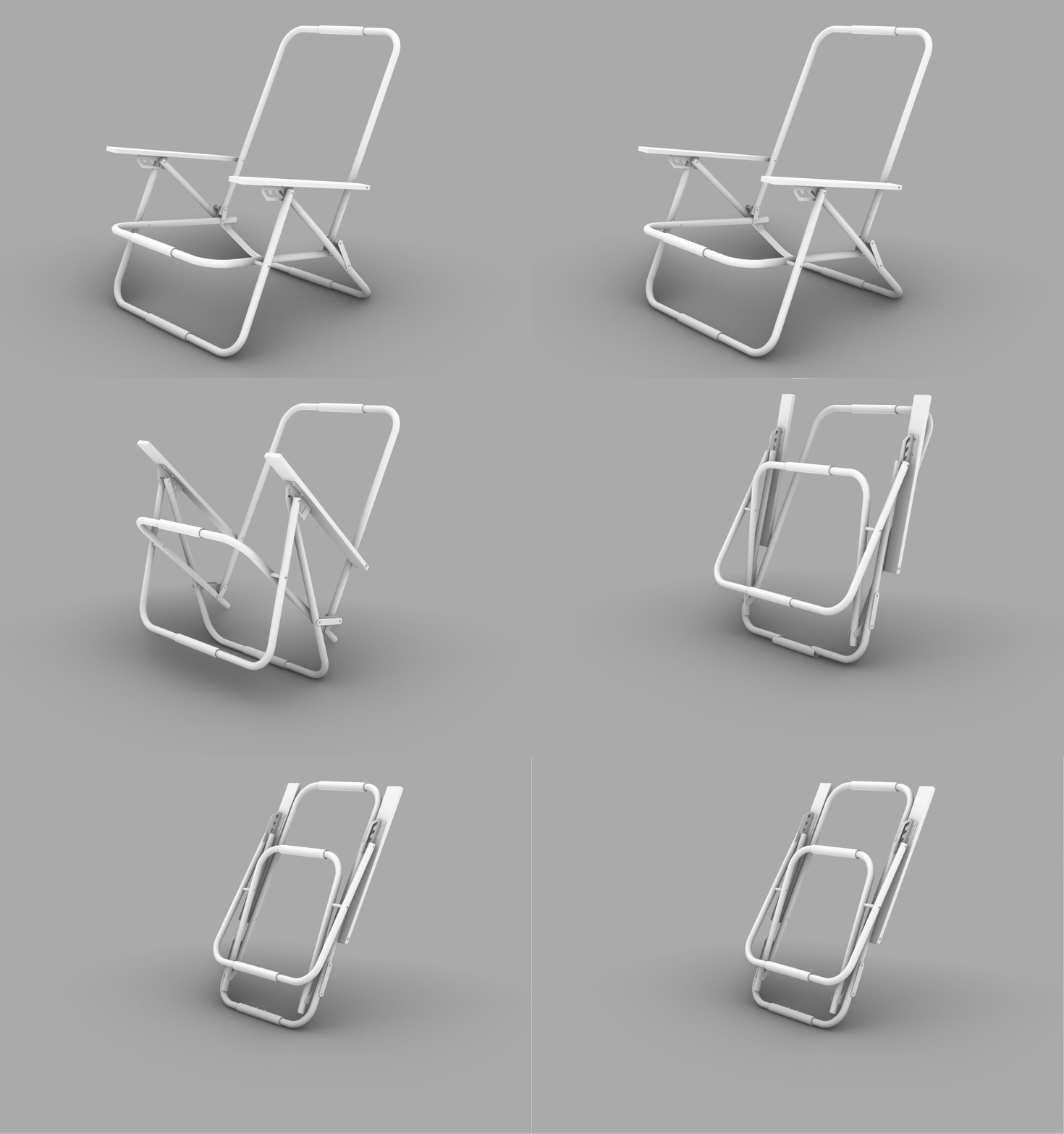
Folding the chair
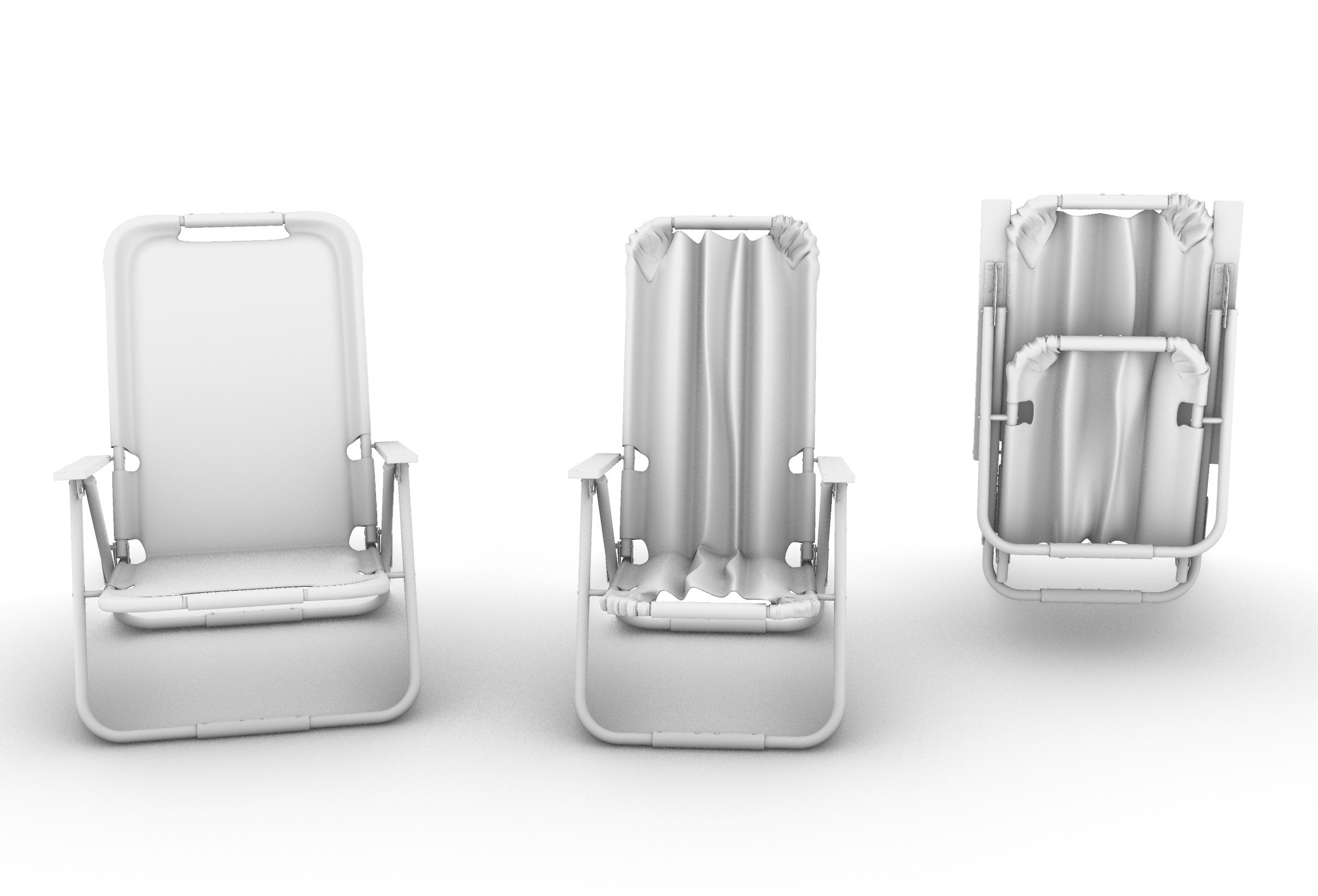
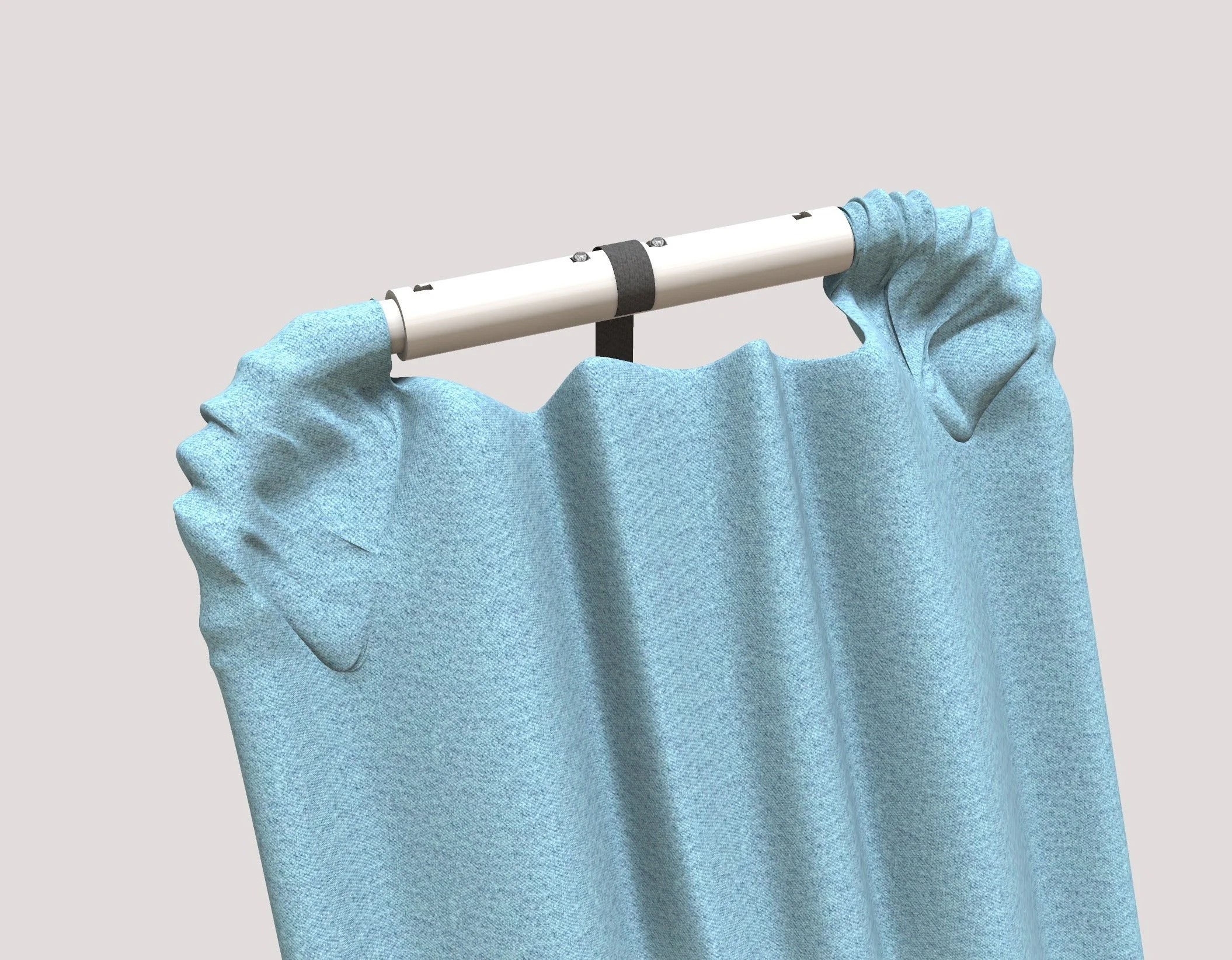
For the mechanism to function, the chair’s fabric also needed to collapse seamlessly.
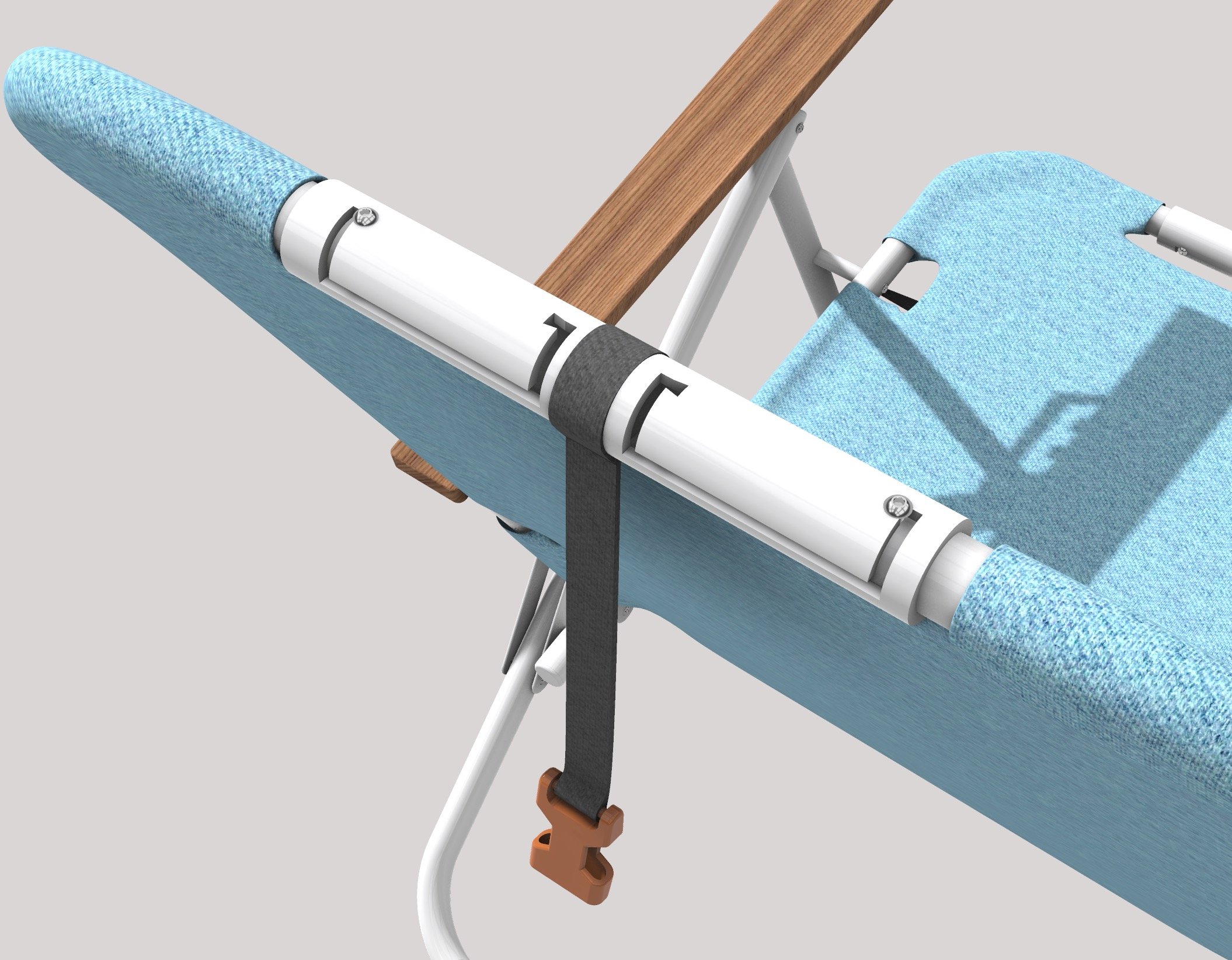
To ensure the chair could fold vertically and contract horizontally while keeping the fabric properly aligned, I introduced intentional gaps in the sewn channels that hold the fabric to the frame.
These openings allow the material to slide smoothly along the piped structure as the chair narrows to match the user’s shoulder profile, preventing interference during movement.
fINAL deSIGN
The final design includes a compact storage pack that attaches to the chair and securely holds a surfer’s valuables while they’re in the water. When the chair is unfolded, the pack hangs discreetly beneath the seat, keeping personal items out of sight and reducing the risk of theft.
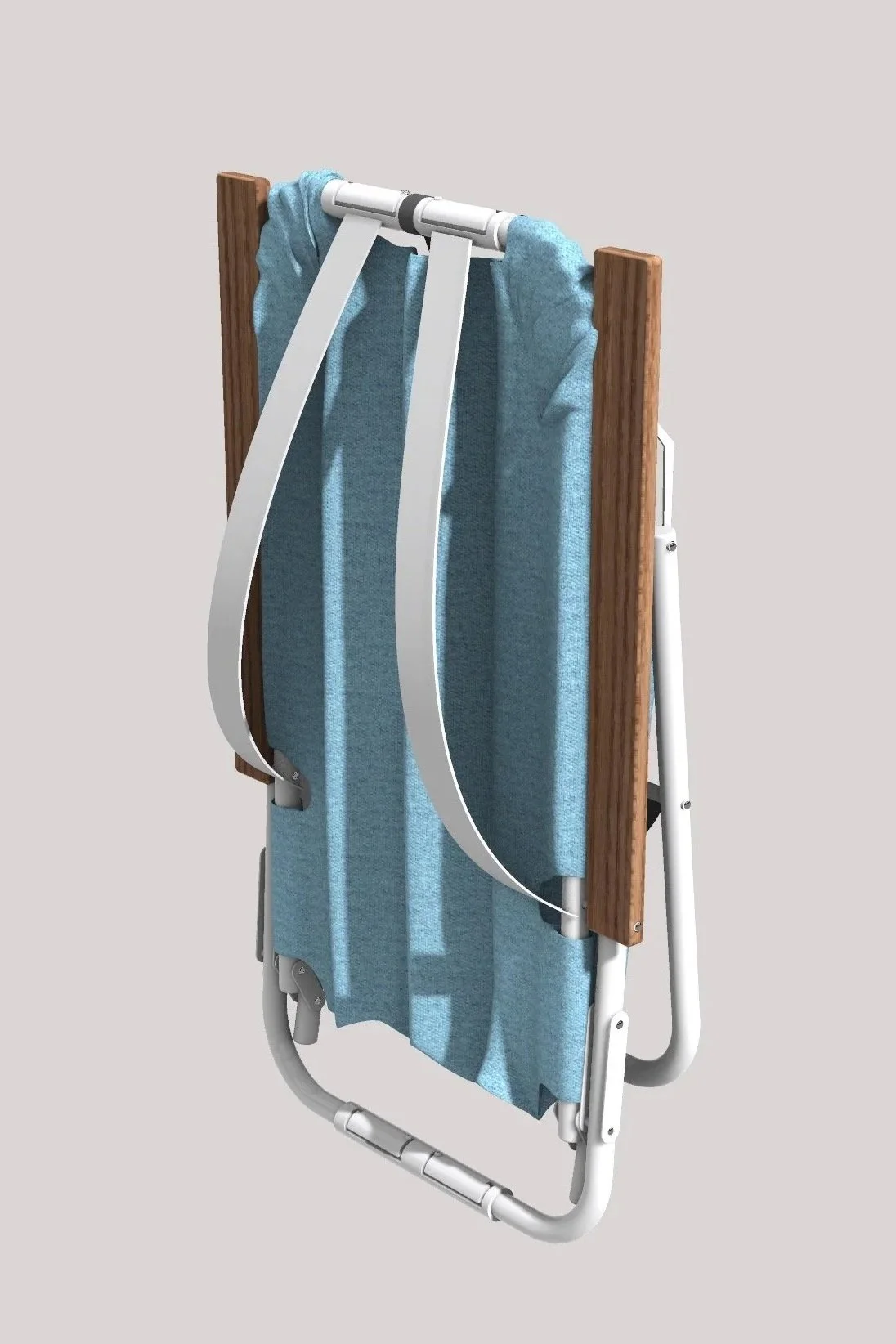
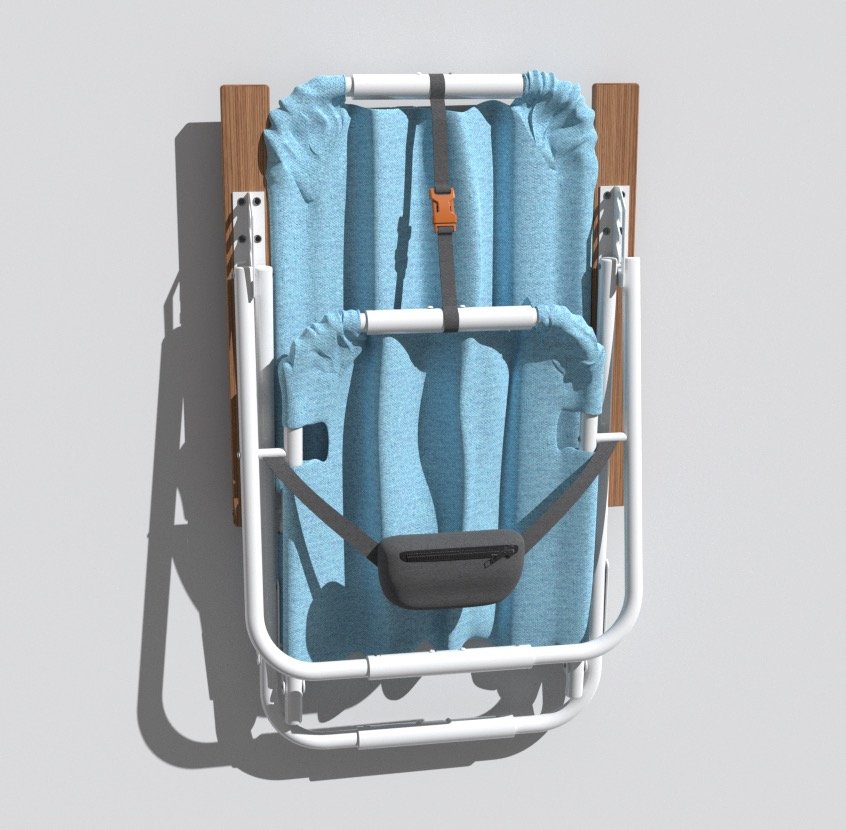
Proof of concept
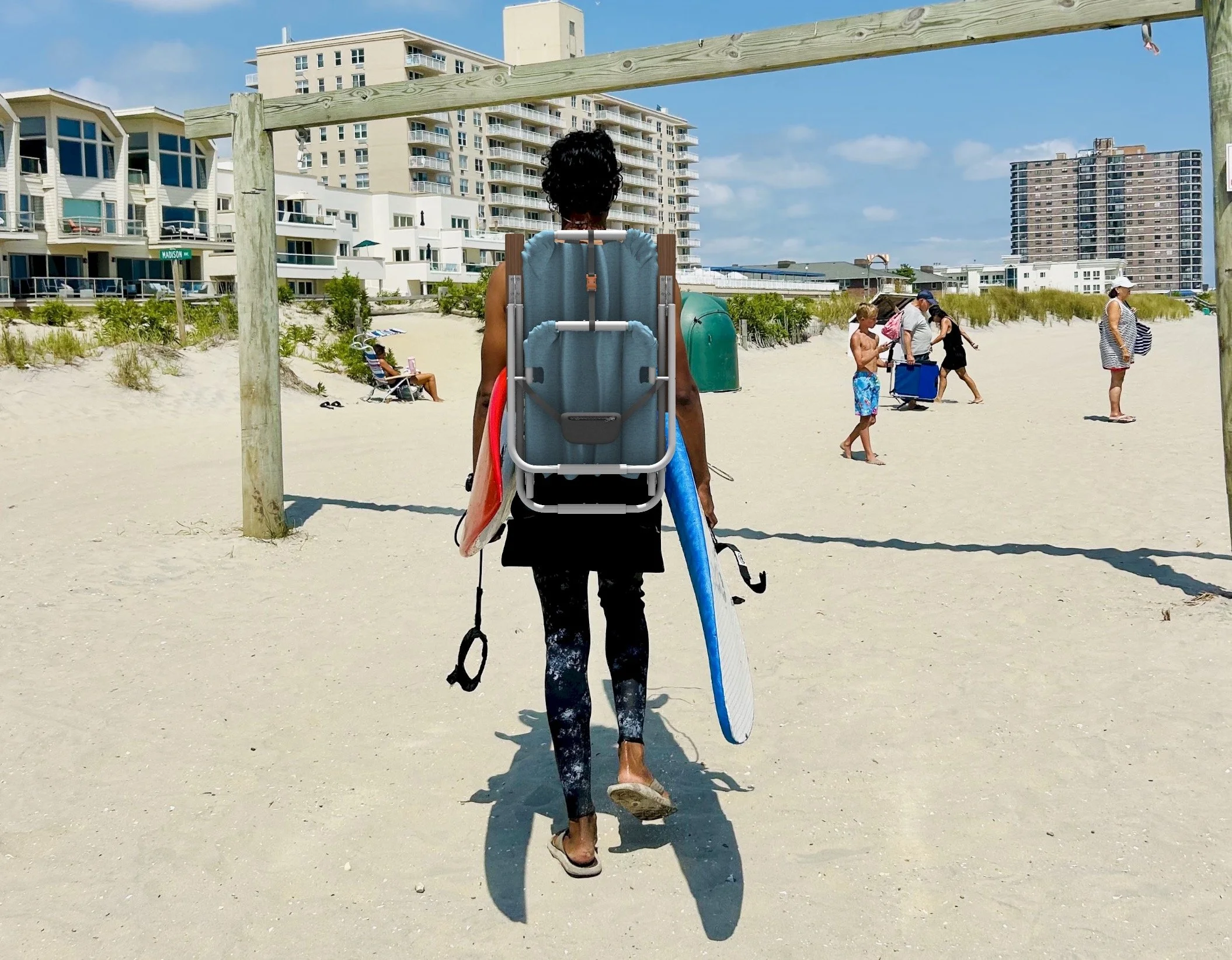
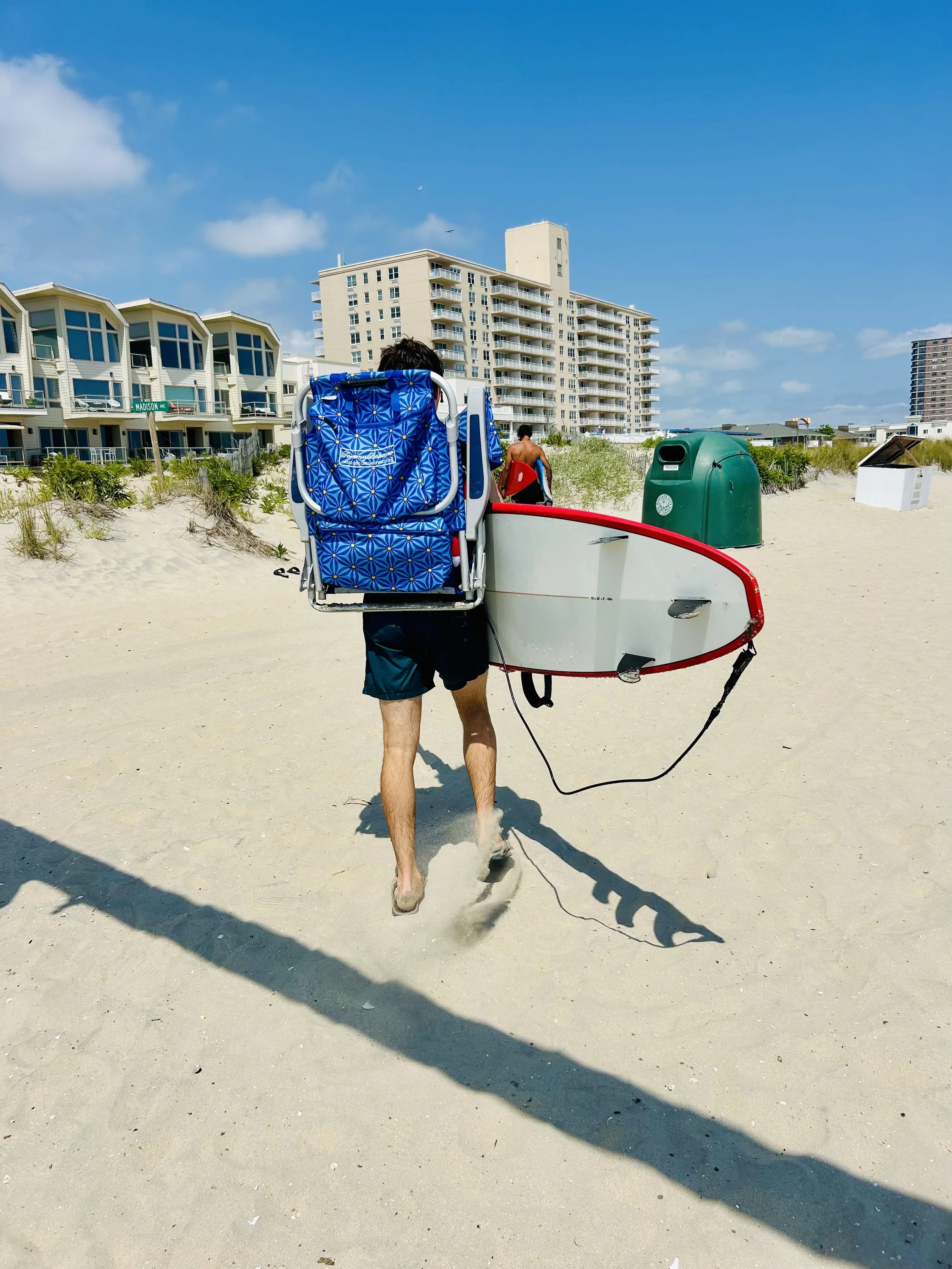
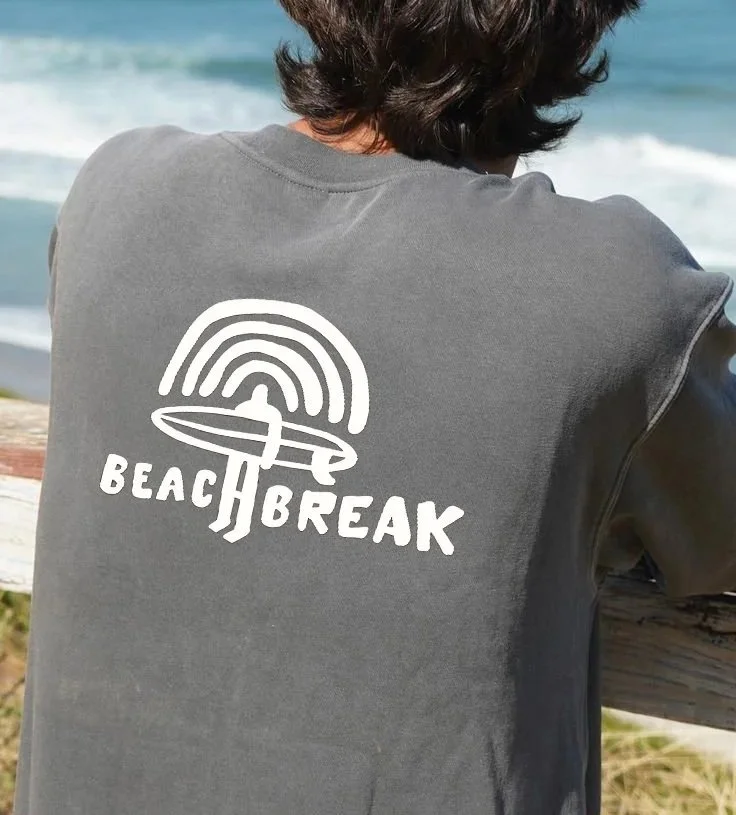
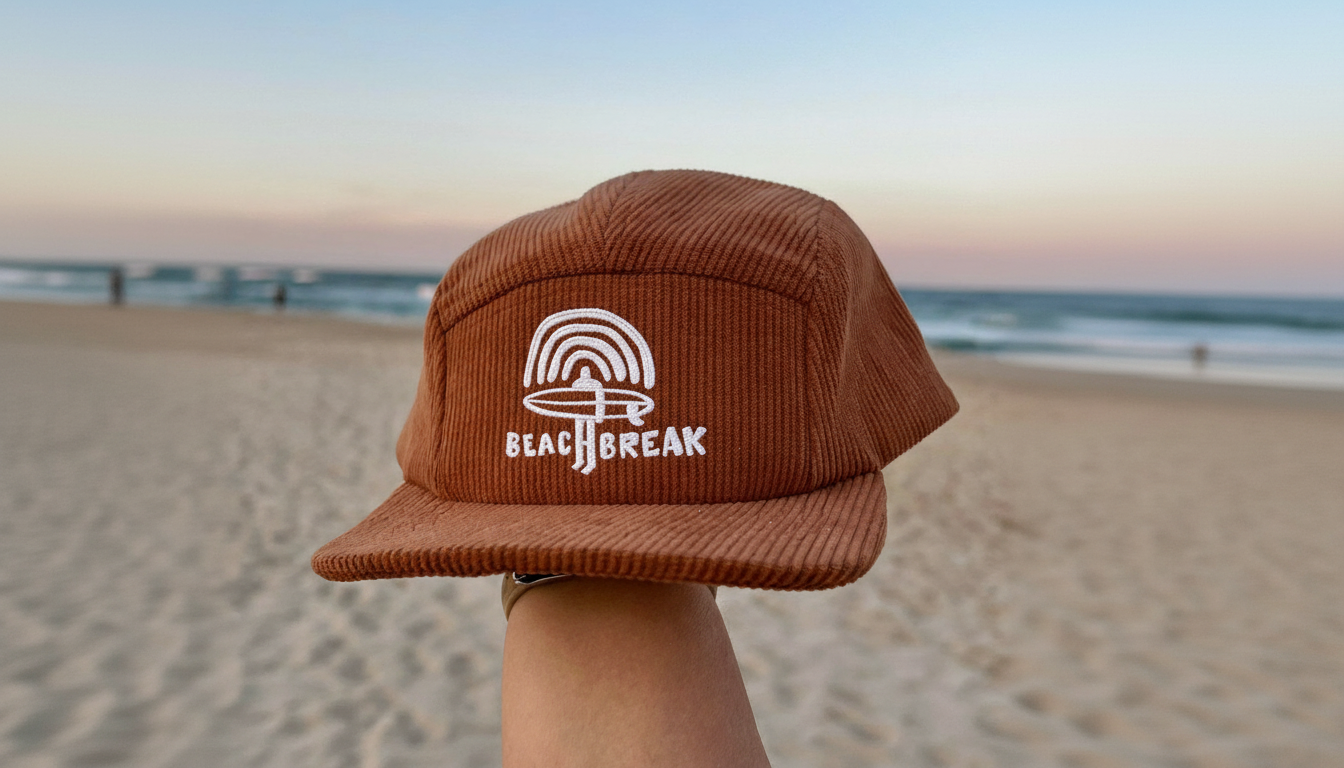
Beach Break
Original
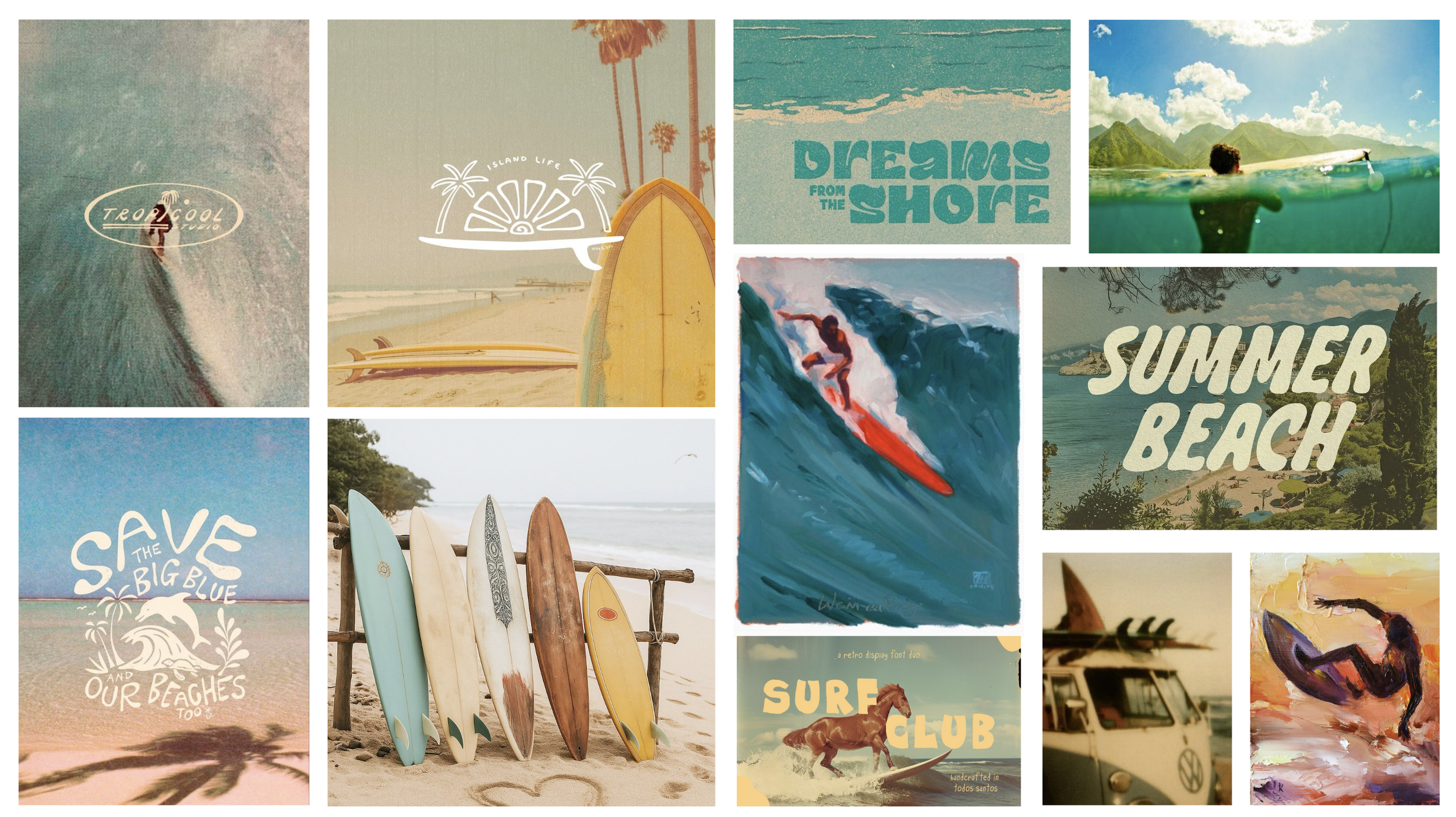
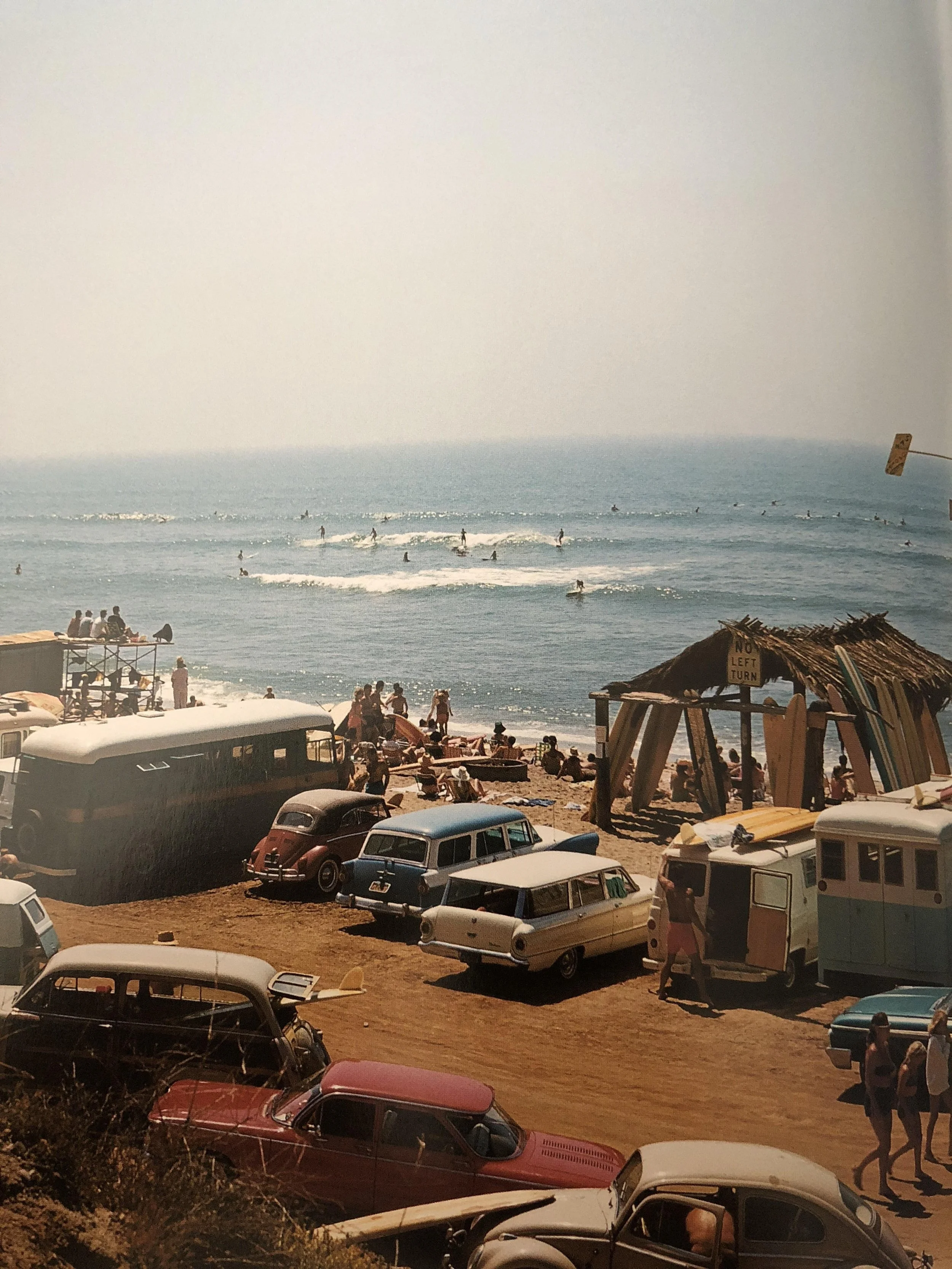
Palette mood board
Light, washed colors feel easy, soft, and low-pressure, matching the emotional tone of surf culture: slow mornings, ocean haze, bleached driftwood, sun-baked dunes. The palette visually communicates that sense of ease.
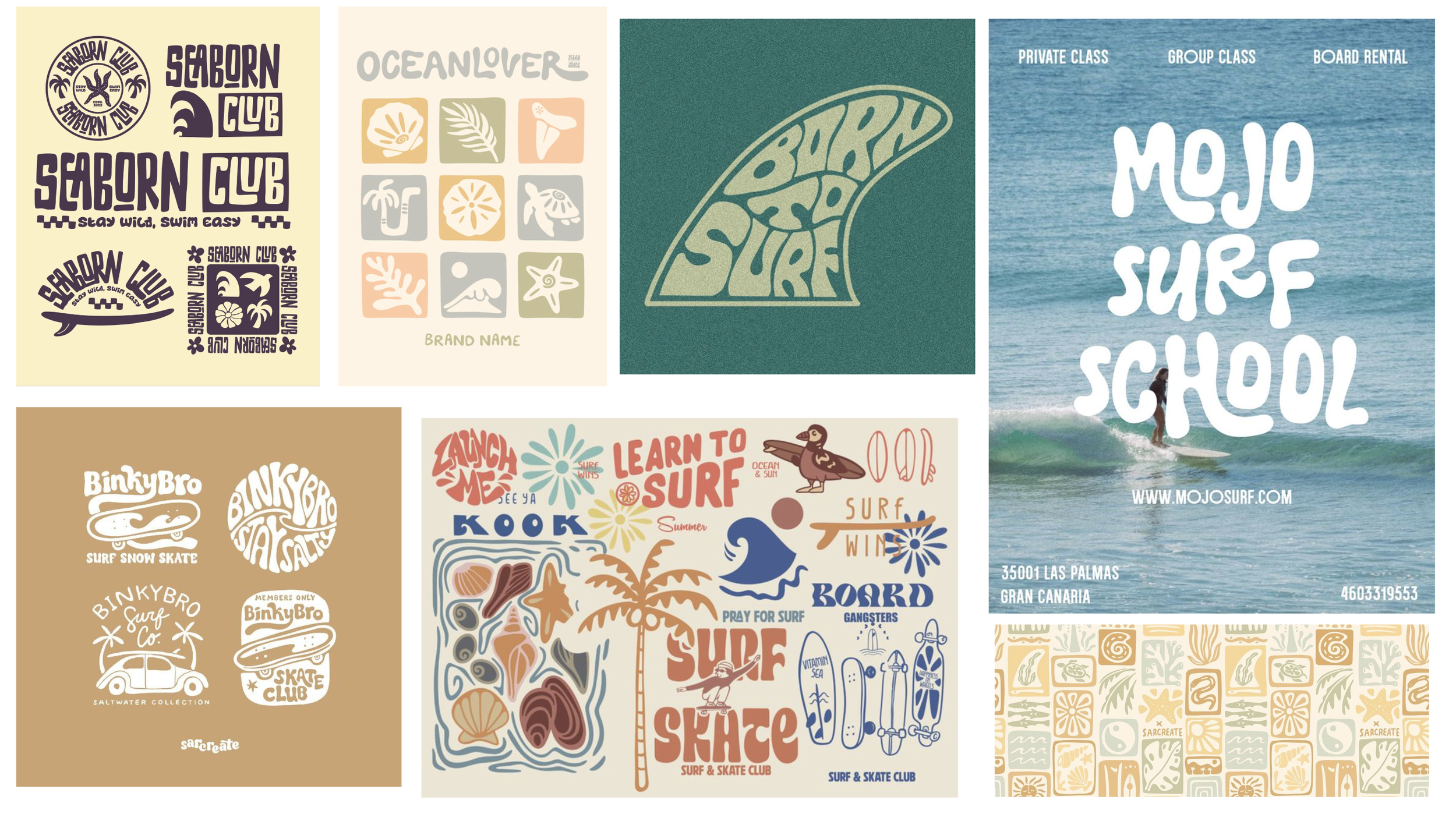
Logo mood board
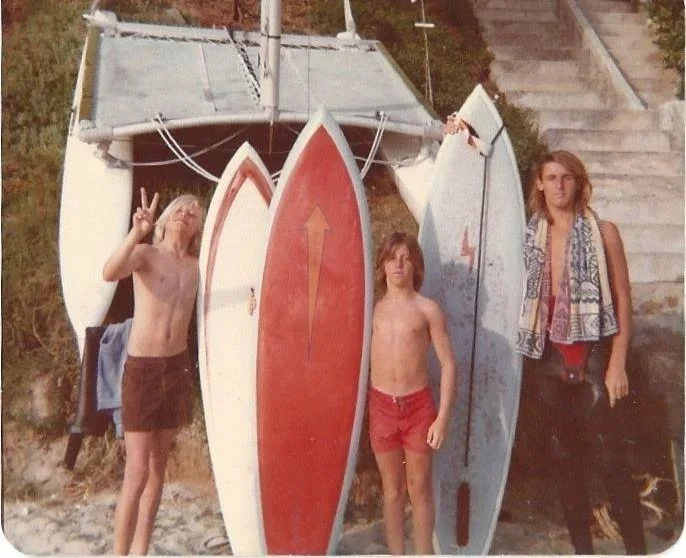
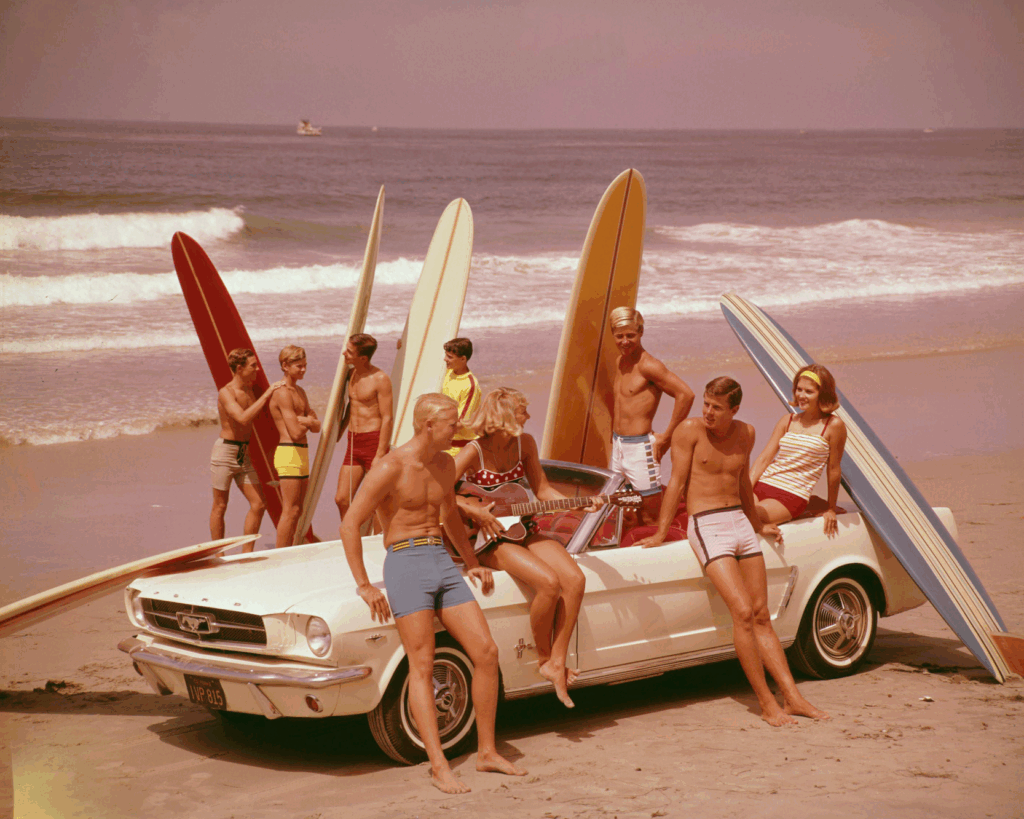
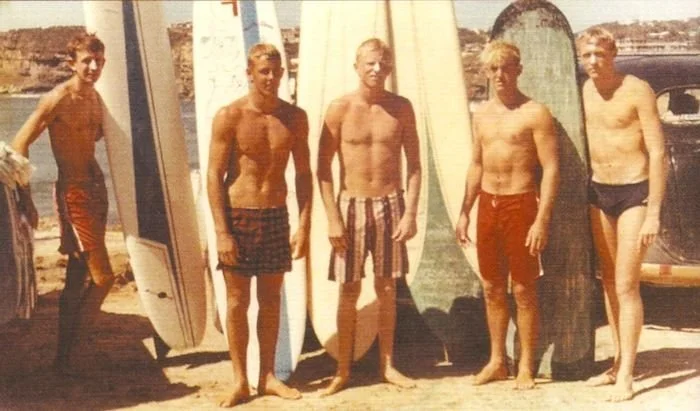
1970s–90s surf magazines and film captured riders in overexposed sunlight, which naturally washed out color. This created a pastel surf look that modern brands now intentionally replicate.
Color Research and mood boards